

„We are looking for the classic group flair“
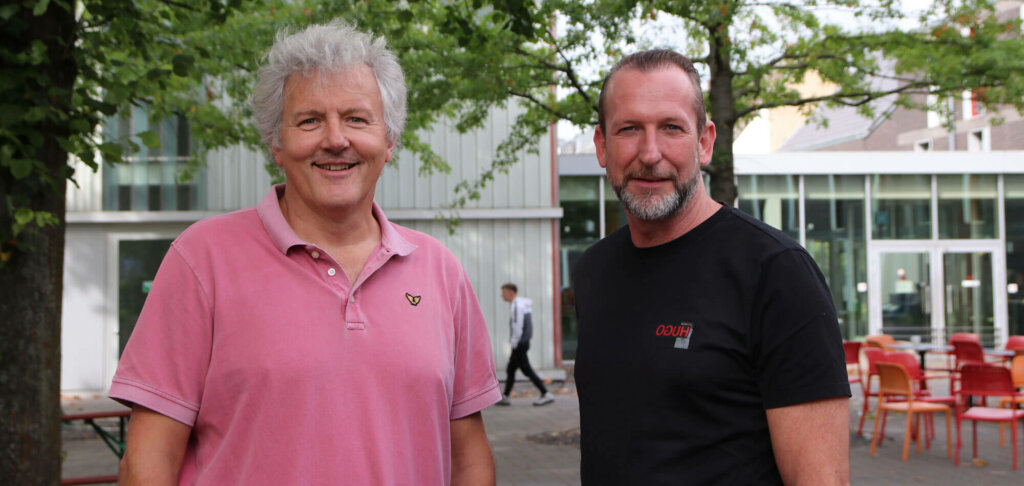
One of Evonik Industries AG's 19 German sites is the Marl Chemical Park in the northern Ruhr region. In 2023, more than 270 young people began their training there. As part of the company-wide training concept, the „new arrivals“ go on an introductory trip to Düsseldorf Youth Hostel shortly after starting their training. They spend a week there together to get to know each other, grow together as a team and discuss topics that go beyond what they learn at vocational school. Team leaders Rainer Steinkamp and Heiko Kenkmann - both trained industrial foremen in chemistry with many years of practical experience - are responsible for organising the trip at the Marl site. In this interview, they talk about the value of this special team experience.
As a company, you have to respond to demographic change and the shortage of skilled labour. How important is the annual trainee trip as an argument in the competition for the skilled workers of tomorrow?
Rainer Steinkamp: There's no doubt that our induction trip is attractive and the trainees talk about it. And they also talk to their friends about the fact that their employer pays for this trip and everything that goes with it. Düsseldorf Youth Hostel, which has excellent facilities and is within easy reach of the city centre, is also an attractive location. If the trainees then post pictures of the TV tower on their social media channels, that is of course also good for Evonik. Nevertheless, the introductory trip is not primarily important for recruiting, but an important aspect of our training concept.
To what extent is the trip important for the training of the new apprentices?
Heiko Krenkmann: The induction week in Düsseldorf helps our trainers to get to know the young people not only professionally, but also as personalities. They learn to assess their social skills, their attitudes and their ability to work in a team and ultimately also see whether the „chemistry“ is right at all levels. After all, they accompany them throughout the entire training period.
If you read the timetables for the trainee training programme, you will discover topics such as sustainability and occupational safety, as well as diversity, social media, nutrition and an iPad rally. What do you discuss there?
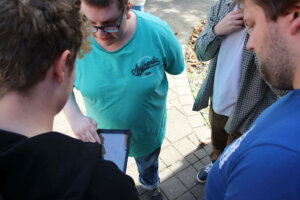
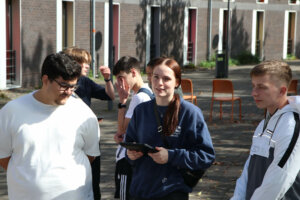
Rainer Steinkamp: The aim is to create momentum with this kick-off. After that, individual topics are covered throughout the entire training programme and are also repeated in lessons at vocational school. The ipad rally is team training for which we use the youth hostels' programme partners. Our trainers develop all other topics themselves and bring in external speakers if necessary. In the sustainability learning block, for example, we talk about the 17 Social Development Goals (SDG) or the chemical industry's mission to look at products as early as the modelling stage to see how they can later be dismantled, recycled or their recyclable materials recovered. Elsewhere, we raise awareness of occupational safety, which is vital for a chemical company. Health coaching is, of course, about healthy sitting or healthy eating, but also about good sleep hygiene during shift work or the effect of highly sugary drinks such as energy drinks on the heart. As a globally active company, Evonik is also very diverse. We provide regular training during the apprenticeship and later on. On a trip like this, however, it is also important to put diversity into practice.
Digitalisation and hybrid technologies are also influencing the meetings and events industry. Nevertheless, the aim of youth hostels is still to enable shared experiences. How important are personal encounters and team experiences from your perspective?
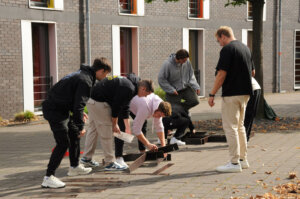
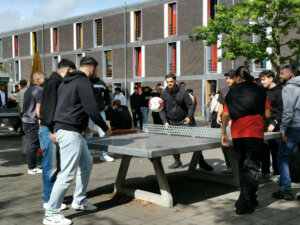
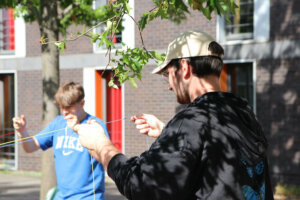
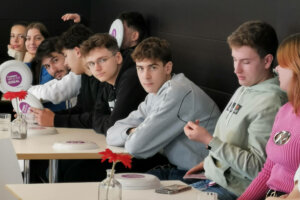
Rainer Steinkamp: Very important. That's exactly why we're here: We are looking for the classic group flair, the interaction within the group. We sit outside in a circle of chairs and talk about diversity - we don't need Power Point slides for that. Many of our trainees have never been on a school trip. And now they are in a room with five or six strangers and have to connect. They share the room without knowing each other's peculiarities. Each person is also physically different, but has to share a bathroom with the others. But this is exactly the kind of interaction that triggers social learning. Or at lunch. It's all about tidiness and cleanliness. Fetching a tray for others, taking a plate, bringing a dessert or getting a juice. Thinking of others, accepting mistakes and the like are social skills that we also need in the world of work. That's why our programme also includes team games - including classic wooden games with diggers and pegging systems - where you have to put something together as a group in under a minute. It's amazing what happens, the dynamics that arise. And that's what we want to tease out. We can't do that digitally.
Heiko Kenkmann: Corona, for example, was a time when we didn't set off for two years. We still realise today that these groups of trainees are not isolated, but they behave differently as a group and have not developed a real group dynamic. This year, the trainees already identify much more strongly with the company. That's why: a trip like this is an investment whose added value cannot be measured in euros - but it is education in every respect. If we didn't do something like this trip, the trainees would miss out on a lot.


 English (UK)
  Deutsch
  Français
  Nederlands